I am working on a large, complex research and writing project. Nervous about getting too much of it out there or writing in more depth about the topic, but here is something I’ve been working on around it recently. Definitely a work in progress of a work in progress.
My mother’s 1970s health food phase is a long-running family joke. Heavy on the health, low on the taste. She was not an anomaly—those food coops we were a part of didn’t come out of nowhere—but it wasn’t until recently that I realized how much of her cooking was part of being a young person in the wake of the ‘60s. The realization hit me during a conversation with my hairdresser. We’re the same age, ladies in our fifties, our facades beginning to crumble, our childhoods part of the Gen X tough-it-out mythos. As we were admiring her latest attempt at taming my increasingly wiry hair, we talked food. “My mother was 19 when she had me,” she told me. “There wasn’t a lot of money, and she wasn’t the best cook. Everything was ‘healthy,’ made with honey. And carob didn’t really cut it.”
Though my hairdresser is from in the Bay Area and I was born on the East Coast, our childhood experiences were similarly carob- and honey-laden. However, my young mother, also 19 when I was born, wasn’t a bad cook. She was culinarily curious, interested in trying things out. The health food focus was part of that curiosity, an illustration of her “nuts and berries” (as a great aunt sardonically put it) hippie-ish ethos. Our kitchen had Diet for a Small Planet alongside Julia Child’s Mastering the Art of French Cooking (Volume 1), James Beard’s books, and the Victory Garden Cookbook. Recipes clipped from the newspaper were sometimes tucked into the pages along with the occasional pressed leaf or flower, the books’ margins penciled-in with cooking tips in my mother’s looping script.
I grew up primarily in a single-parent home with my grandmother playing a lead supporting role. Mom-mom took care of me on long weekends and the random snow day or school strike. I spent long lazy summers with her and my grandfather at their “California-style” ranch located near Maryland’s Elk River. I even lived with them for most of third grade when my mother returned to college. In these early years, my father, a meat and potatoes man, was an intermittent presence. Care and feeding were the responsibility of the maternal side of the family.
These were lean, difficult years. My mother worked a series of underpaid menial jobs until she graduated from college in the early 1980s and moved on to a series of underpaid writing and editing jobs. Despite our poverty and her general overwhelm, I don’t remember ever going hungry, except on those nights when I was sent to bed without dinner, a parenting disciplinary technique born out of desperation. Besides, my grandmother was always there to pick up the slack in more ways than one, those ways being heavy on the hydrogenated oils and daytime television, the hum of her Singer sewing machine threading the gaps.
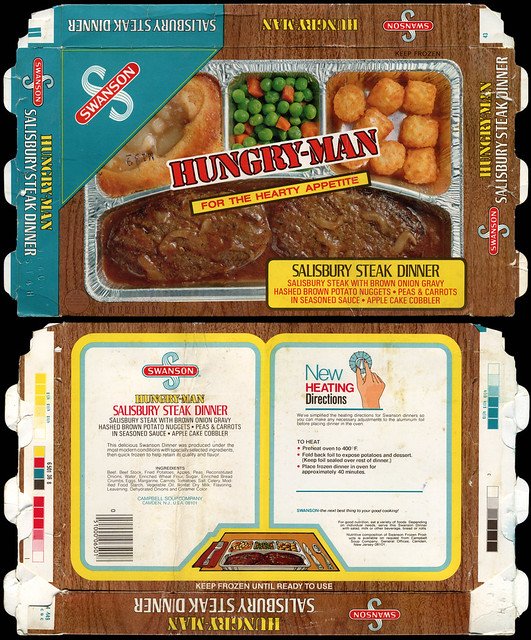
What were my grandmother’s feelings about food and meal prep? The fragmentary evidence would indicate that she did not love to cook, though she was expected to do so. I mainly remember the delicious processed food she prepared, apart from her less-delicious vegetable soup, made up of scraps of frozen this and canned that. She was born in 1914 and came of age in the immediate aftermath of the Great Depression. These years overlapped with huge changes in the way Americans ate, with easily available frozen and canned foods and the growth of food conglomerates and mass marketing. New food technologies pared down food preparation time, freeing up time for other things, such as sewing, poker games with her friends, or The Price is Right. Dinner at her house, served at 5pm sharp, was occasionally of the TV variety, served on TV trays while we watched TV. It was slightly easier living made better through (food) chemistry.
That was childhood, a back-and-forth conversation of souffles, honey, and Hungry Man Salisbury steak. Then my grandmother abruptly ended the dialog. She crumpled in front of me on her kitchen floor, groceries melting on the counter. I was nine years old, in the middle of fourth grade. The conversation abruptly became one-sided—until it petered out entirely.